
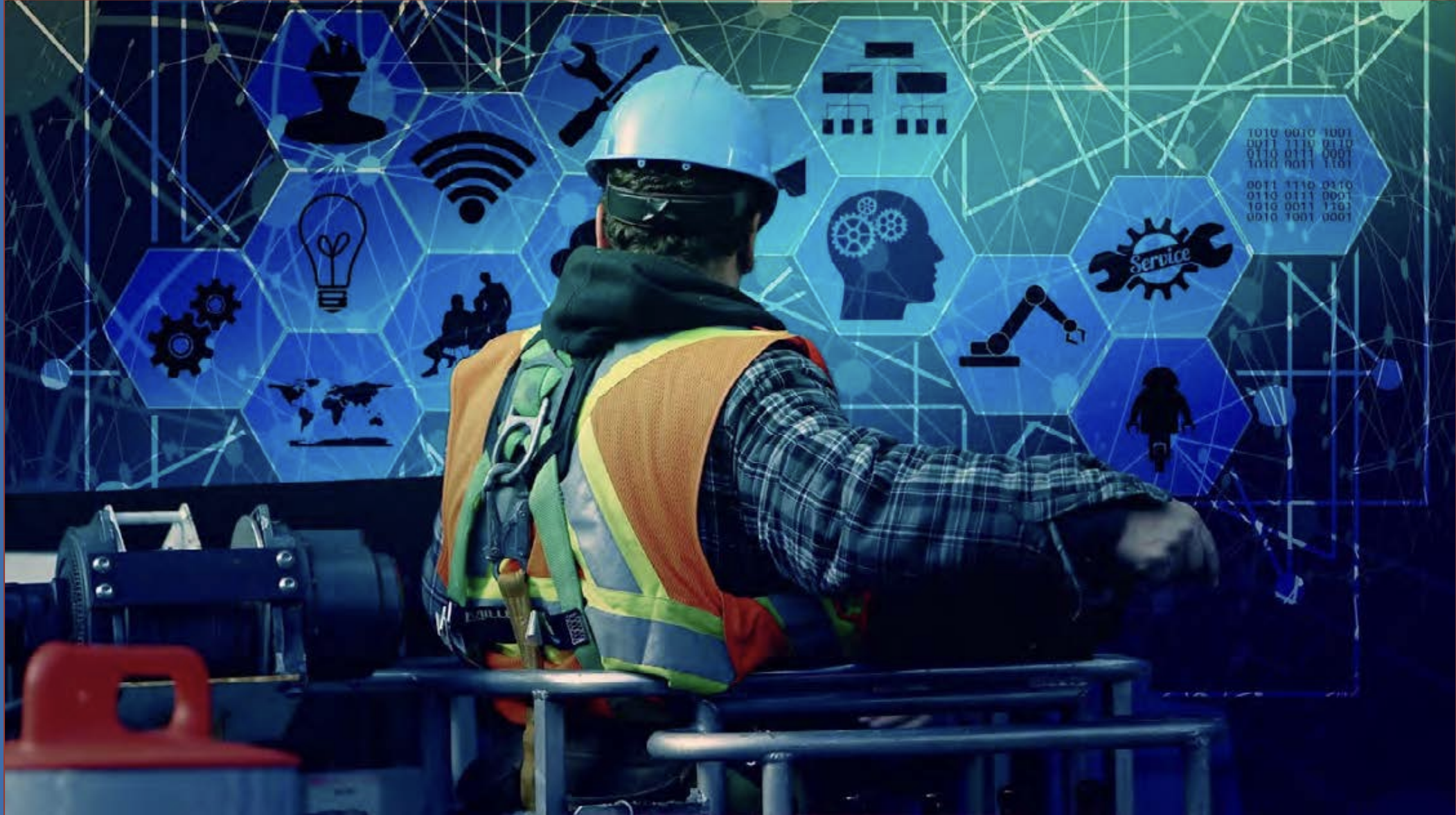
Artificial Intelligence (AI) is revolutionizing the construction industry by offering solutions that enhance efficiency, safety, and decision-making throughout a project’s lifecycle. From initial planning to the final stages of construction, AI technologies are making significant impacts. This article explores the functionality, benefits, and potential future developments of AI applications in the construction section.
AI in Planning and Design
The application of AI begins in the earliest stages of construction — planning and design. Here, AI can optimize building designs through algorithms that analyze numerous variables such as material costs, environmental factors, and structural requirements. One such application is the use of generative design software, which leverages AI to explore all possible
permutations of a solution, quickly generating design alternatives and adapting to the specified parameters. This not only speeds up the design process but also ensures that the solutions are both innovative and efficient.
AI-powered tools like Autodesk’s BIM 360 and Revit use machine learning to predict project outcomes, improve the accuracy of the plans, and simulate various construction scenarios. This predictive capability allows architects and engineers to see the potential impacts of their design choices in real-time, leading to more informed decision-making.
AI-Driven Design Optimization
One of the most transformative applications of AI in construction is in design optimization. With generative design, AI algorithms can quickly
produce a multitude of design solutions that meet predefined criteria such as cost, time, material types, and environmental impact. This technology allows designers to input their design constraints into the AI system, which then iterates thousands of different configurations to find the most optimal designs. These solutions are often innovative and efficient, pushing the boundaries of traditional design by exploring shapes and forms that may not be immediately obvious to human designers. The power of generative design lies in its ability to consider a more comprehensive array of factors simultaneously than a human could feasibly analyze in a reasonable timeframe. This includes not only the physical and economic constraints but also the lifecycle implications of materials and energy efficiency of buildings. As a result, designs proposed
MAY 2024 THE CONTRA CTOR’S COMPASS 18
by AI can lead to more sustainable buildings, use resources more efficiently, and are better adapted to their environments.
Enhancing Architectural Visualization and Simulation
AI also enhances the visualization and simulation of architectural designs. Advanced software enables architects and planners to create detailed 3D models that simulate real-world phenomena, such as the flow of natural light, air quality, and energy consumption patterns within a building. These models help architects understand how their buildings will perform and allow them to make adjustments before construction begins, thus avoiding costly postconstruction changes. For instance, AI-powered tools can simulate various lighting scenarios based on geographical location and seasonal changes to optimize natural lighting, which can significantly reduce a building’s electricity usage. Similarly, by simulating airflow within a design, architects can enhance the building’s natural ventilation, improving air quality and reducing the need for mechanical ventilation systems.
Streamlining Compliance and Documentation
AI applications extend beyond design and modeling to streamline regulatory compliance and documentation. AI can automatically check designs against local building codes and regulations, ensuring compliance and identifying potential issues early in the design process. This automation significantly reduces the time and effort required for compliance checks, which traditionally involve manual reviews that can be timeconsuming and prone to error.
Moreover, AI systems can maintain detailed logs of all design decisions and changes, creating an audit trail that can be invaluable for project management and compliance verification. This capability not only simplifies project management but also enhances transparency and accountability in construction projects.
Collaborative Design Environments
AI fosters collaborative environments by integrating with cloud-based platforms where project stakeholders can interact with the AI-driven models in real-time. These platforms allow architects, engineers, clients, and contractors to work together more effectively, making collective decisions that are informed by AI-generated data and simulations. This collaboration leads to more cohesive and coherent designs and can help in preempting potential future conflicts in the construction phase.
Challenges and Considerations
Despite these advancements, the integration of AI in construction planning and design is not without challenges. Issues such as data privacy, intellectual property, and the need for significant initial investment in technology can be formidable barriers. Additionally, there is a need for skilled professionals who not only understand construction and design principles but are also proficient in AI technology.
As the construction industry continues to embrace digital transformation, AI in planning and design is set to become more pervasive. With further advancements and wider adoption, AI could soon be a standard tool in the architectural and construction toolkit, leading to more efficient, sustainable, and creative building designs.
Enhancing Project Management
AI significantly enhances project management in construction through improved scheduling, resource allocation, and risk management. Tools such as ALICE Technologies employ AI to simulate different project paths and determine optimal construction strategies. This application allows project managers to foresee potential delays and resource bottlenecks, thus minimizing downtime and improving project delivery timelines.
Machine learning algorithms analyze historical data to predict project risks and propose mitigation strategies. This
proactive risk management is crucial in an industry where delays can be costly. Additionally, AI integration with project management software can streamline workflow by automating routine tasks and facilitating communication among project stakeholders.
Automating Project Scheduling and Resource Allocation
One of the primary applications of AI in construction project management is the automation of scheduling and resource allocation. Traditional methods often involve manual data entry and constant updating, which are both timeconsuming and prone to human error. AI-powered tools, however, can process vast amounts of data quickly and with high accuracy. These tools use predictive analytics and machine learning algorithms to forecast project timelines, allocate resources optimally, and adjust project schedules dynamically in response to any changes or delays. This not only saves valuable time but also significantly reduces the cost overrun risks associated with manual scheduling.
For example, AI systems like ALICE Technologies allow project managers to input various parameters and constraints, from which the software generates multiple efficient project execution strategies. Managers can then compare these scenarios to determine the most effective approach, considering factors like cost, duration, and resource utilization.
Enhancing Risk Management
AI also plays a crucial role in enhancing risk management in construction projects. By analyzing historical data and ongoing project metrics, AI models can identify potential risks before they become problematic. This predictive capability allows project managers to implement preemptive measures, reducing the likelihood and impact of negative events. Moreover, AI-driven data analysis helps in understanding the complex interdependencies within a project, enabling managers to foresee the cascading effects of delays or other issues. This holistic view is vital for
MAY 2024 THE CONTRA CTOR’S COMPASS 18
safety increases the productivity and efficiency of building projects.
Predictive Analytics for Safety
Artificial Intelligence has the capability to examine past building project data and detect trends and patterns linked to mishaps and near-miss situations. Construction organizations can lower the risk of accidents by implementing targeted safety measures made possible by this predictive capabilities. AI building The use of artificial intelligence (AI) technologies to continually monitor building sites and identify potential dangers and hazards in real-time is known as “real-time safety monitoring.” This creative strategy makes use of AI’s enormous data analysis capabilities to enable preemptive steps that guarantee worker safety and avert mishaps. AI is also capable of analyzing past data from completed construction projects to find trends and patterns pertaining to near-miss occurrences and accidents. Construction organizations can lower the risk of accidents by implementing targeted safety measures made possible by this predictive capabilities.
Automated Safety Reporting
Worker comments, near-miss reports, and safety event reports can all provide valuable insights for the construction management software. By identifying trends and resolving recurrent safety concerns, this data analysis can assist construction businesses in fostering a safety culture.
Behavioral-based Workplace Safety Monitoring Solutions
Construction sites are generally known for being dangerous and dynamic places to work. Construction organizations may now adopt targeted safety training thanks to AI-powered construction safety solutions that can identify unsafe activities. This strategy reduces possible hazards and fosters a culture of safety.
AI-driven Risk Management
Moreover, pre-construction risk management is being improved with AI. By presenting a comprehensive picture of the project’s progress, detecting potential dangers, and facilitating prompt intervention, this creative method seeks to increase project efficiency and safety.
Adapting to AI in Construction Safety: A Guide
Understanding the Technology
Comprehending AI and its applications is essential to effectively implementing it in construction safety. This includes being familiar with data analysis tools, machine learning algorithms, and AI systems.
Training and Education
It is crucial to invest in manager and worker education and training. This comprises instruction in the use of AI-driven safety systems, data interpretation, and the application of AI-driven safety measures.
Collaboration with AI Experts
In order for construction companies to properly implement artificial intelligence into their safety protocols, they must collaborate with AI experts. This cooperation may involve providing constant help, continuing consultation, and the development of safety solutions that are powered by artificial intelligence.
• Involve Stakeholders: To obtain varied viewpoints and improve safety procedures, regularly include stakeholders in discussions concerning AI implementations.
• Partnerships with Subject Matter Experts: Collaboration with consulting industry leaders and artificial intelligence safety specialists is the greatest way to stay up to date on the latest safety technology and best practices.
Implementation of AI Solutions
AI in construction safety demands a wellplanned approach that takes organizational, technological, and human elements into account. Construction organizations may significantly improve their safety standards, lower risks, and improve worker outcomes by carefully developing and applying AI.
• Pilot Testing: To assess the effect of AI solutions on safety, start with pilot projects that test them in controlled settings.
• Gradual Roll-out: Apply effective AI solutions over time to additional business domains while keeping a close eye on performance and resolving any problems that may emerge.
Implementing AI Safety Protocols
The implementation of AI safety protocols involves integrating AI-powered safety systems into the construction process. This includes setting up the necessary hardware and software, establishing data collection and analysis protocols, and integrating AI insights into safety measures.
Continuous Improvement
Construction safety and AI are quickly developing fields. Maintaining current with the most recent advancements, periodically assessing and revising AI safety procedures, and adjusting to new technology and best practices are all components of continuous improvement.
Conclusion
An important step forward for the construction industry is the implementation of artificial intelligence (AI) in safety measures. This technology offers innovative approaches to enhance worker safety and minimize hazards. It is possible for construction organizations to successfully transition into this new era of construction safety if they have a thorough understanding of the technology, if they make investments in training and education, if they collaborate with AI experts, if they implement AI safety measures, and if they continue to improve. This proactive approach not only ensures the health and safety of construction workers, but it also helps to cultivate a culture of innovation and safety within the overall construction industry
About the Author
Dan Doyon is an independent consultant based in Dallas, Texas, and Director at Maxim Consulting Group (www. maximconsulting.com). He works with construction-related companies to solve complex business challenges to increase revenue and profitability. With his guidance, companies have driven over $160 billion in top-line sales growth and hundreds of millions in operational savings through improved processes. Dan specializes in business transformation and turnarounds, has published research papers and trade articles, and is an acknowledged industry speaker. Dan received his MBA from Georgetown University. He can be reached at dan.doyon@maximconsulting.com.
MAY 2024 THE CONTRA CTOR’S COMPASS 18
© 2026 Maxim Consulting Group. All Rights Reserved.
